Wolf range won't hold a low simmer? A Pleasanton kitchen guide
A Wolf sealed burner that flares instead of holding a gentle simmer is usually a small, fixable fault — what it means in a Pleasanton kitchen and how it's diagnosed.
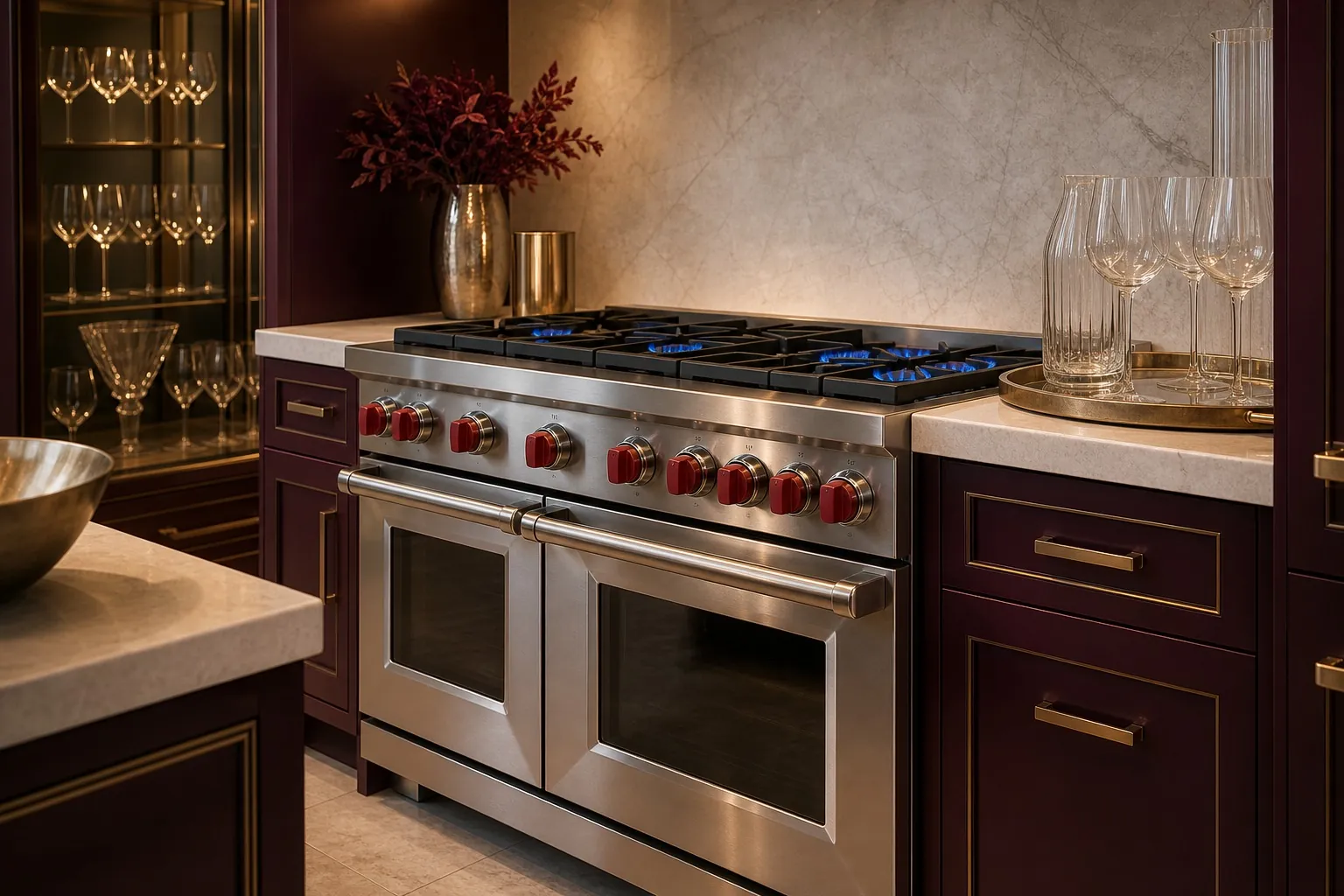
A Wolf range is bought for its low end — the dual-stacked sealed burner that's supposed to drop to a whisper-quiet simmer for a sauce that can't be rushed. So when that simmer turns into a flicker that keeps flaring or threatening to go out, it's the call we get most often from Pleasanton cooks.
Good news: it's rarely the expensive part you're picturing. Wolf builds cooking equipment — ranges, rangetops, ovens and cooktops — and the simmer fault almost always lives in the burner, not the brain. Here's how to read it.
Why the simmer goes first
The low simmer is the hardest thing a gas burner does. It runs on a tiny, precise amount of gas and air, so any small disturbance shows up there long before it affects a rolling boil. A cap that has shifted a hair out of seat, a burner port partially blocked by a boil-over, or a simmer setting that's drifted out of calibration will all read the same way to the cook: the flame won't sit low and steady.
Because the high settings have so much margin, they keep working fine, which is why people assume the whole burner is failing when really one narrow operating point has lost its tuning. That's also why a simmer complaint is usually a small fix, not a new range.
What you can check first
Let the burner cool, lift the sealed cap and the brass burner ring, and look for residue bridging the ports — a heavy pasta or sauce boil-over is the classic offender. Clean the ports gently (a soft brush, never a drill bit or anything that reshapes them), make sure the cap and ring drop fully flush into their seat, and dry everything before relighting. A surprising share of "won't simmer" calls clear up right there.
If the flame still flares or hunts after a clean reseat, the burner likely needs a low-flame (simmer) recalibration to factory spec, or a worn igniter or valve component is involved. That's the point to stop and let a specialist set it, because the simmer adjustment is a defined Wolf procedure, not a knob you tune by eye.
What a specialist does — and what Wolf does not make
On site we confirm the burner is clean and seated, then set the low-flame simmer to Wolf's factory specification, test the igniter and valve, and run the burner down to its lowest stable point to verify it holds before we leave. Genuine OEM parts and the 365-day labor warranty apply to a cooking repair the same as a refrigeration one.
One clarification we give often: Wolf is a cooking brand. If someone tells you your "Wolf refrigerator" or "Wolf dishwasher" needs service, the built-in refrigeration is its sister brand, Sub-Zero — which we also service across Pleasanton and the Tri-Valley. To book either, call or use online booking; we keep contact to phone and booking only, so you reach a real scheduler rather than a form.
Wolf guide FAQ — Pleasanton
Why won't my Wolf burner hold a low simmer?
The simmer is the most sensitive setting, so it shows trouble first. A shifted burner cap, ports blocked by a boil-over, or a simmer calibration that has drifted are the usual causes — all small, fixable faults rather than a failed range.
Can I fix a flaring Wolf simmer myself?
Sometimes. Cool the burner, lift the cap and ring, clean any residue from the ports with a soft brush, and reseat everything flush and dry. If it still won't hold a low flame after that, it needs a factory-spec simmer recalibration, which is a defined procedure best left to a specialist.
Does Wolf make refrigerators or dishwashers?
No. Wolf builds cooking equipment — ranges, rangetops, ovens and cooktops. Built-in refrigeration and wine columns are its sister brand, Sub-Zero, which we also service across Pleasanton and the Tri-Valley.
Rather have a Pleasanton specialist handle it?
Speak with a built-in refrigeration specialist now, or book online in under a minute. $89 service call, waived with repair, and 365-day warranty on all labor.