Sub-Zero Wine Cooler Repair in Pleasanton
A diagnostic walk-through of Sub-Zero wine cooler repair in Pleasanton: dual-zone drift, sensors, the sealed system, gaskets and UV glass, vibration, and when to repair vs replace.
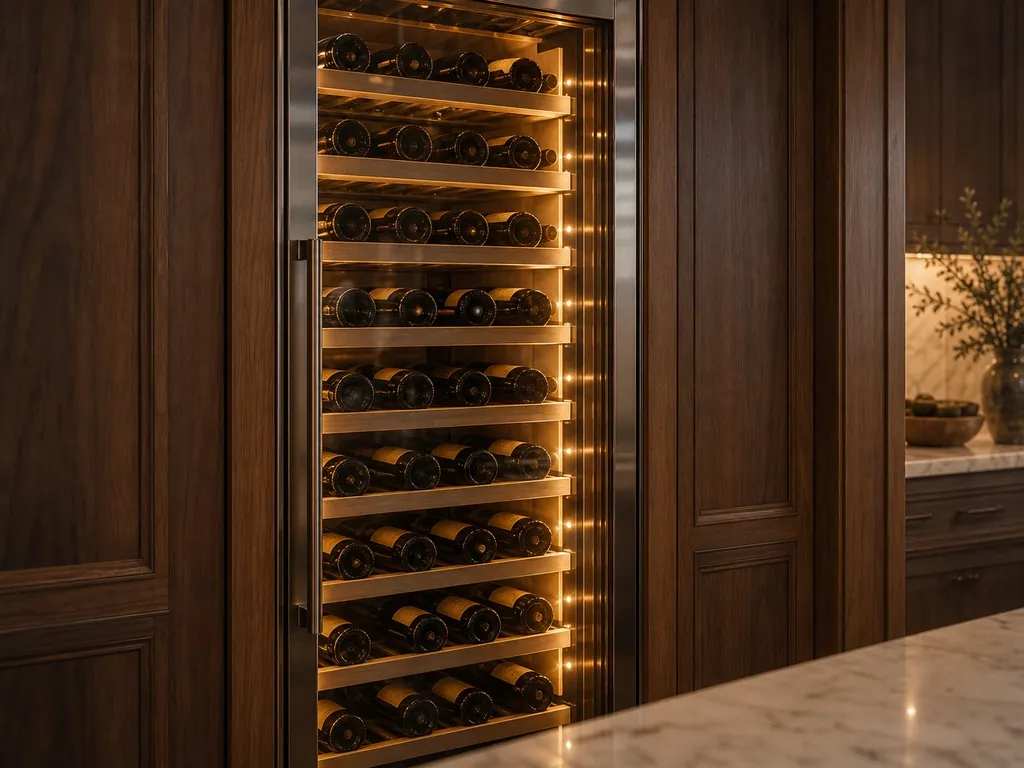
A built-in Sub-Zero wine cooler is the quietest appliance in the house until the day it isn't — a faint new hum, a zone that reads warmer than its setpoint, or a bottle of Livermore Valley red that suddenly tastes off. In a town where serious cellars sit behind homes near Ruby Hill and out toward the Wente and Concannon vineyards, that is a call worth making early.
Sub-Zero builds genuine dual-zone wine storage — not a beverage fridge with a thermostat, but a precision cabinet meant to hold reds and whites at separate, stable temperatures for years. When one drifts, the fix usually lives in one identifiable subsystem. Below is how an independent specialist works through it.
Two zones, two ways to fail
The defining feature of a Sub-Zero wine cooler is independent dual-zone control: an upper or lower compartment for whites near the low 50s and a separate one for reds in the upper 50s, each governed by its own sensor and damper. That independence is also where most faults announce themselves. When one zone holds perfectly while the other drifts a few degrees, the problem is rarely the compressor — it is the control side of that single zone: a failing zone thermistor reporting the wrong temperature, a stuck damper that won't modulate cold air, or an evaporator fan that has slowed.
A thermistor that reads two degrees high will quietly let the cabinet warm while the display still looks plausible, which is why collectors often catch it by taste or by an independent thermometer before the electronics flag anything. These are bounded, well-understood repairs, and proving which one it is on site is what keeps the quote honest.
The sealed system, airflow, and the seals that matter
If both zones drift warm together, attention shifts to the cooling source the two zones share — the sealed refrigeration system and the condenser that sheds its heat. A condenser caked with the fine dust a closed Pleasanton home accumulates loses capacity gradually, and many panel-ready coolers tuck that coil into a tight cabinet cutout where airflow is already tight. Clearing and verifying that airflow is the first, cheapest check.
The seals are the other quiet culprit. A door gasket that has lost its squareness lets humid room air leak in, forcing the system to overwork and inviting condensation. On glass-door models the UV-tinted insulated panel does double duty — blocking light that ages wine and sealing the cabinet — so a failing edge seal there shows up as both warmth and fogging. Only when those are ruled out does a true sealed-system or compressor fault get quoted, and that always follows pressure and electrical readings, never a guess.
Vibration, sediment, and repair vs. replace
Wine cares about more than temperature. A worn fan bearing or a compressor mount that has aged into a buzz transmits constant micro-vibration into the rack, and over months that can disturb the sediment in age-worthy bottles — a real concern for the cellars tucked into Vintage Hills and Kottinger Ranch estates. A cooler that has grown noticeably louder is worth a look before it costs you a vintage.
When owners ask whether to repair or replace, the math usually favors repair on a built-in Sub-Zero. The cabinet, racking and panel-ready integration are the expensive parts, and those rarely fail; sensors, fans, dampers and gaskets are serviceable. A sealed-system repair on a unit well past a decade is the one case where replacement deserves a real conversation — and we will tell you plainly when you have reached it rather than sell a repair the readings don't support.
Repair guide FAQ — Pleasanton
One zone of my Sub-Zero wine cooler is warm but the other is fine — what is it?
An isolated warm zone points at that zone's own controls rather than the compressor: most often a failing thermistor reading the wrong temperature, a stuck damper, or a slowed evaporator fan. We read both zones against factory targets on site to confirm which before quoting.
Can constant vibration from the cooler hurt my wine?
It can. A worn fan bearing or aged compressor mount transmits micro-vibration into the rack that, over months, can disturb sediment in older bottles. A cooler that has grown noticeably louder is worth diagnosing early.
Is it worth repairing a built-in Sub-Zero wine cooler or should I replace it?
Usually repair. The costly parts — cabinet, racking and panel-ready integration — rarely fail, while sensors, fans, dampers and gaskets are serviceable. Replacement only really enters the conversation on a sealed-system failure in a unit well past a decade, and we will say so honestly.
How do I book wine cooler repair in Pleasanton?
Call us or book online — those are the only two ways we take work, with no forms or email. Have your model and serial from the door jamb ready, plus your neighborhood, so the likely parts ride along on the first visit.
Rather have a Pleasanton specialist handle it?
Speak with a built-in refrigeration specialist now, or book online in under a minute. $89 service call, waived with repair, and 365-day warranty on all labor.